ECG (Electrocardiogram)
What is ECG?
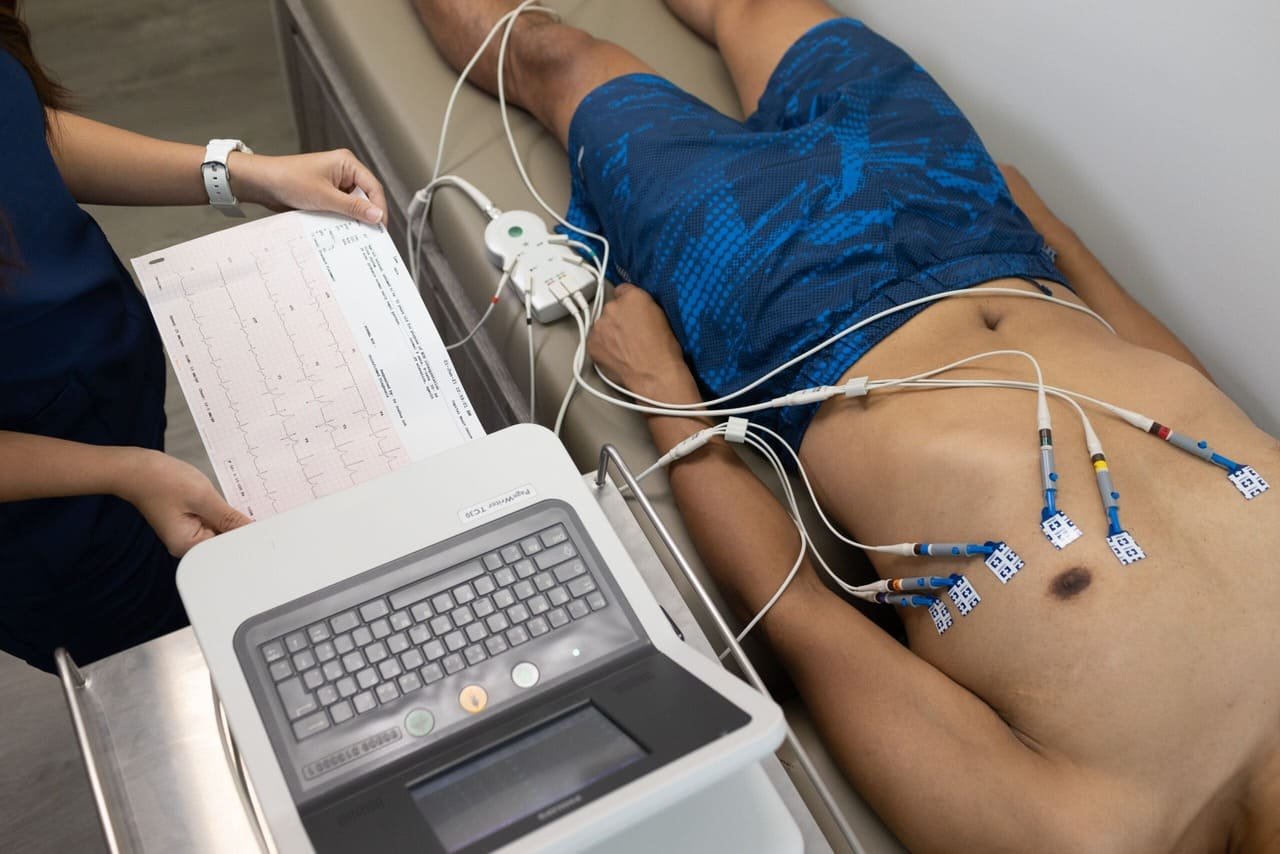
An Electrocardiogram (ECG) is a simple, non-invasive test that records the electrical activity of the heart. Small electrodes are attached to the skin to monitor heart rhythms, rate, and electrical impulses, helping to detect heart conditions.
ECG is crucial for identifying issues such as arrhythmias, heart attacks, and heart disease, providing real-time insights into the heart's electrical function.
Why is it Important?
ECG helps detect abnormal heart rhythms, heart attacks, and other heart-related conditions. It’s an essential tool for early diagnosis, allowing for timely treatment and the prevention of potential complications.
Who Should Consider It?
ECG is recommended for individuals experiencing chest pain, dizziness, shortness of breath, or irregular heartbeats. It’s also important for those with a family history of heart disease or those over 40 to monitor their heart health regularly.
Quick, Accurate, and Non-Invasive
With an ECG, heart conditions are diagnosed quickly, accurately, and without any discomfort. It’s an essential test for identifying potential issues early on, ensuring effective and timely medical intervention.
How Dr. Amar Upadhyay helps
Dr. Amar Upadhyay provides expert ECG (electrocardiogram) consultations, helping patients assess and monitor heart health with precision. He interprets ECG results to detect conditions such as arrhythmias, heart attacks, ischemia, and other cardiac abnormalities. By carefully analyzing electrical patterns of the heart, he ensures accurate diagnosis and guides appropriate treatment plans. Dr. Upadhyay also explains results in clear, understandable terms, helping patients understand their heart condition and take informed steps toward recovery or prevention. His attention to detail, combined with compassionate care, makes ECG evaluations under his guidance reliable, informative, and a key part of maintaining cardiovascular health.